
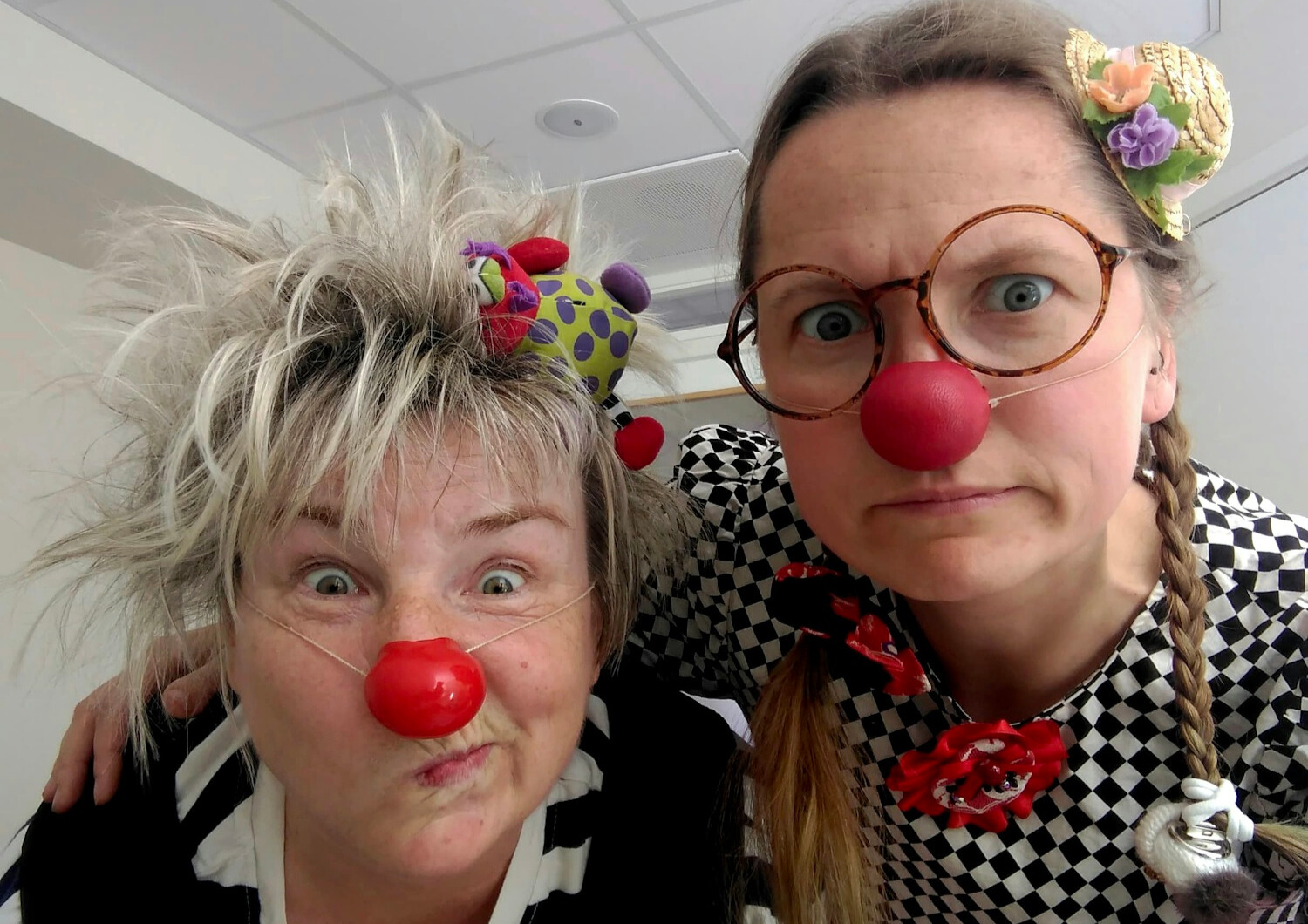
“If we don’t get to work in a hospital for a long time, the immediate response is: ‘Where have you been? We’ve been waiting for you!” It’s very nice to hear that,” says Elena Alexandrova, or Dr Pepi. She is in her ninth year as a clown doctor at Liepaja Regional Hospital.
The clown doctors from my course were the first to work in Liepaja Hospital. We were the pioneers. At that time, some other hospitals in the region also joined. At the beginning, we had to say a lot about what clown doctors were, because at that time the profession was not as popular as it is now.
I’m from Saldus, but I was ready to work in Liepaja right away. Liepaja is very dear to my heart, and there is the sea. I often combine my work in the hospital with walks along the sea. Now Liepaja is my clown home.
It takes me an hour and 40 minutes to get there by car. If my husband drives me, he drives faster, shorter time. At the beginning, it was different – I took the bus. I went to Skrunda, where Rudīte lived, another doctor clown. Then we both went in her car. We did all kinds of things. It was great that we could share the road, it was a real journey, an adventure. We had time to talk, to discuss everything. At that time Ance from Aizpute also worked in the clowns, she was paired with Linda.
I still like the long way to the clowns. It helps me to disconnect from my main job, from the kindergarten routine. Then – whoops! – I’m in the clowns. If there’s an emotionally difficult moment during the clown change, I tell my husband on the way home. I shrug it off, leave everything on the road.
But mostly after the clown change I have those wings. Joy. Lightness. I am a metre above the ground. Many people don’t understand: how, you meet sick children, but you are excited?! It’s hard to say. When I’m in the clown, everything disappears, it’s easy and interesting.
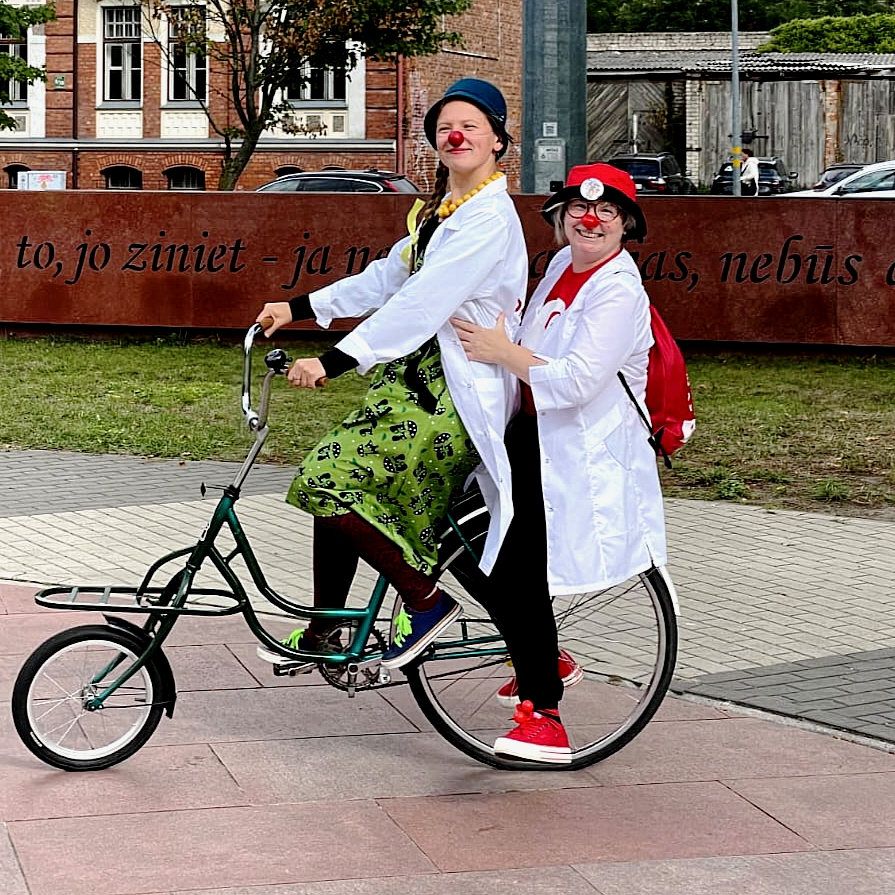
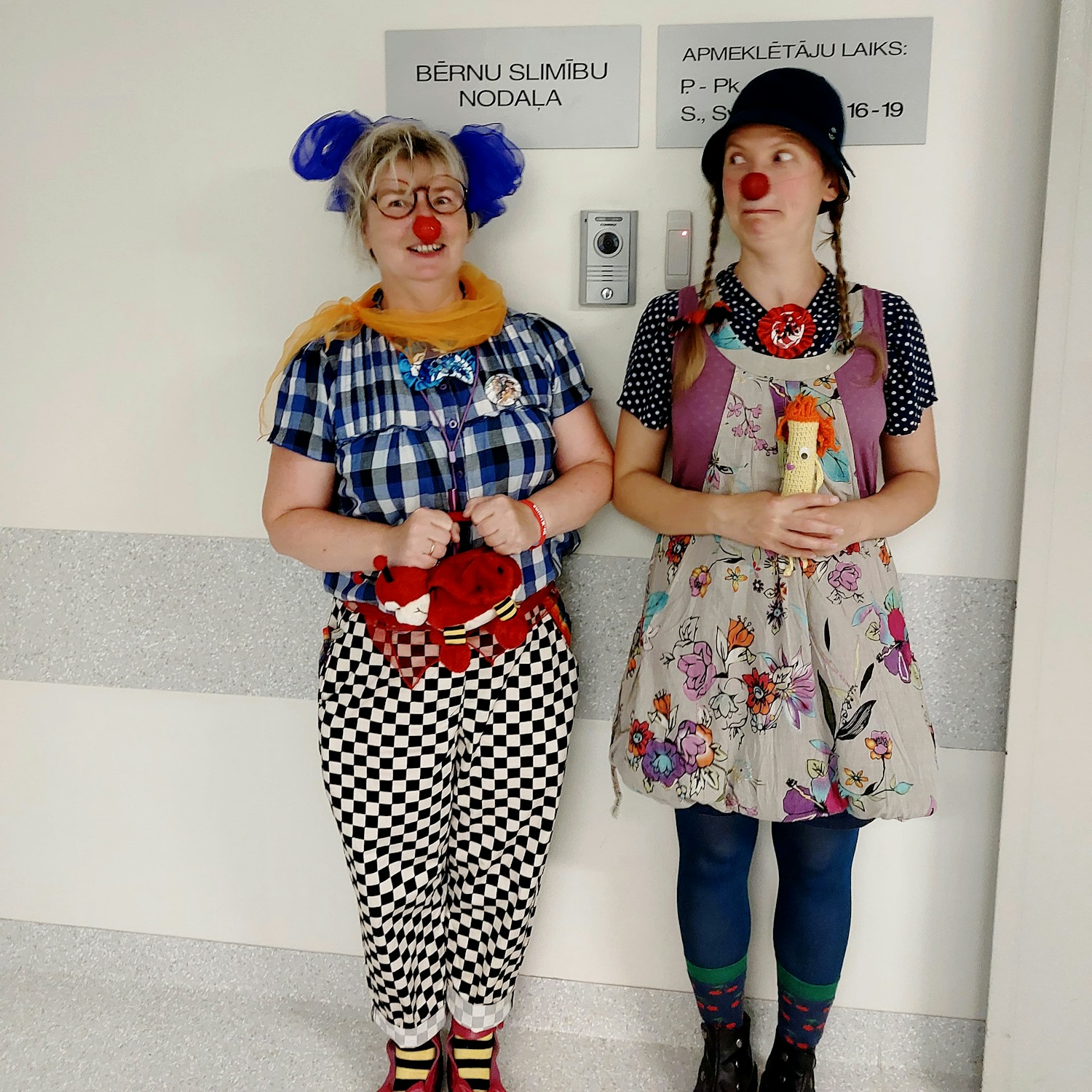
At first, rather reticent, but not dismissive. They looked at how we worked, how we were. Slowly, step by step, with jokes and smiles, we gradually gained their trust. Now we are very welcome and treated very favourably. If we don’t manage to be there for a while, the sisters and others immediately ask where we have been, tell us that they are waiting for us. It is really lovely.
We have a very good relationship with our head nurse Gundega. We always ask where we can go. We know everything about what is allowed and what is not, and we respect that. We know that the nurses don’t like it when it’s loud in the ward. They want the games to take place in the wards, not in the corridors. We respect all that. We do not drink coffee with the staff, and we do not need to. And we are Kurzeme people, so we are quite reserved.
There is a doctor who is always happy to see us, you can tell she really likes what we do. She once said with a smile: do our children really have to get sick to meet you…
There are medics who take the lightness of clown games into their arsenal. One nursing assistant is like a clown herself, her facial expressions and gestures are special. And we see how well she interacts with children.
Of course, there are differences from the big Riga hospital. The children’s ward in Liepaja is small, there are fewer children. So we go into each ward and make games in each ward. In Liepaja, I am currently wandering around with Dr Pinda (LindaSkranda), she has better contact with the teenagers, I have better contact with the little ones. I really like working with the babies. I understand that the clown play, the lightness, is more for the mother, but the little ones are nice to look at with wide eyes and smile or wave their hand.
When there are few children, we go to adults – in reception, rehabilitation, oncology or palliative care. There, the clown doctors have to work a little differently, something we are still learning.
I don’t remember the vivid stories. Because I leave everything that happened in the hospital there. Once there was a clown shift, about which we laughingly said that it was not us, Peppi and Pindu, who worked it, but Georgie the bull, my sock puppet. Georgie is particularly dear because he was once made by the children in my kindergarten big group. This sock puppet has its own aura, its own warmth.
When do we use it? If a child is afraid, insecure or for some other reason does not go directly to the clown doctors, then I take Georgik into my service, we work with his help. The children love to play with the puppet.
Once there was a touching encounter that was not directly related to clowning. We entered the ward and immediately noticed that the child’s mother was looking at us in a very special way. Her gaze is full of surprise, but at the same time it is full of gratitude and affection. There are tears in her eyes.
At first, we didn’t understand why there was such a reaction. Then we saw the book she was reading – “The Wonderful Games of Doctor Clowns”. It’s a book by Igor Narovsky, a teacher of clowns, about how clowns work in the hospital. She read it avidly and lived the stories from the bottom of her heart, and that’s when we came in. It was a moment full of special emotion.
Sometimes I want to define what we do, I’m looking for the most precise name. The word “work” seems too rough for the profession of clown doctors. Mission is too high a shelf. Service doesn’t fit either. I haven’t found a definition yet, but it’s not the word, it’s the feeling. It’s what remains in the heart.